Barbone Mask

- Country: Mexico
- Source: Mexico, Guerrero. ca. 1900 - 1949
- Origin: Guerrero.
- Size (cm): 26
- Material: Silver
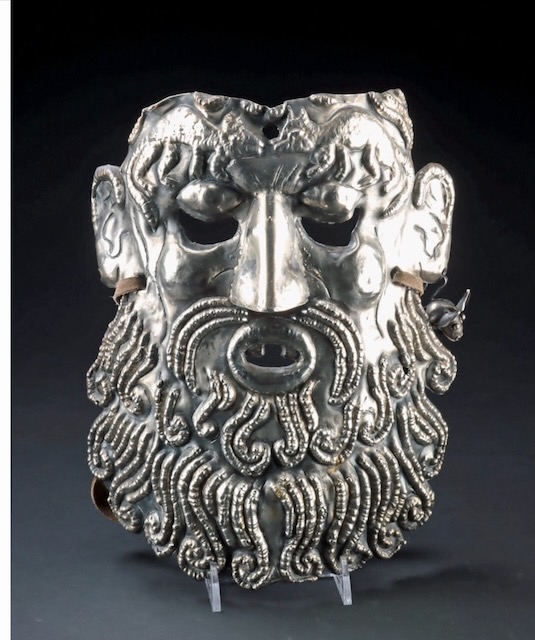
Latin America, Mexico, Guerrero., ca. 1900 – 1949 CE. A dramatic and finely worked example of a so-called “Barbone” mask, this silver visage merges European physiognomy with fantastical animal imagery, its surface alive with repousse detail and theatrical expression. The face, unmistakably bearded and foreign in character, is framed by curling, textured locks and punctuated by almond-shaped eyes set above crescent-cut openings, while the open mouth reveals two widely spaced, prominent teeth that lend the mask a striking, almost animated presence. Hammered from high-grade silver of approximately 94.6% purity, the mask is richly ornamented with confronting coyote figures across the brow, their bodies arched in tension, suggesting movement and symbolic confrontation. Interestingly, a small coyote-form bell earring, dating to the Mixtec Pre-Columbian culture, suspends from one side, adding both visual intrigue and a subtle kinetic element. Though once attributed to pre-Hispanic traditions and even linked to the rain deity Tlaloc, such interpretations have been convincingly challenged. As noted by anthropologist Dr. Fernando Nava, pre-Hispanic rain ceremonies dedicated to Tlaloc did not involve masks of this kind, and certainly not metal examples. In traditional Nahua contexts, dance held sacred importance, often tied to agricultural cycles and appeals for rain, yet the material and physiognomy here point instead to a later, hybridized imagination.
Though once attributed to pre-Hispanic traditions and even linked to the rain deity Tlaloc, such interpretations have been convincingly challenged. As noted by anthropologist Dr. Fernando Nava, pre-Hispanic rain ceremonies dedicated to Tlaloc did not involve masks of this kind, and certainly not metal examples. In traditional Nahua contexts, dance held sacred importance, often tied to agricultural cycles and appeals for rain, yet the material and physiognomy here point instead to a later, hybridized imagination. The result is a compelling hybrid object – part theatrical artifact, part masterful display of silversmithing – reflecting not an ancient ritual past, but the evolving dialogue between indigenous craftsmanship, colonial legacy, and the tastes of a global audience.